Aston University study shows that biochar increases tree growth by 50%
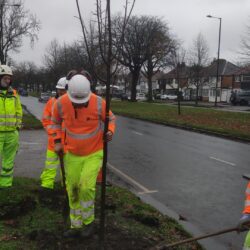
Tree saplings planted with biochar added to the soil grow 50% more than saplings planted without biochar, according to our new research.
Biochar is form of sustainable charcoal that is extremely stable and can store carbon in soil. It is used in horticulture to increase soil aeration, improve soil fertility, reduce nutrient leaching and reduce soil acidity. The growth of young trees is influenced by the ability to establish a strong root system within the first 12-36 months, which is affected by water availability, soil quality and protection from external damage.
Trees planted in public spaces in the UK often suffer problems establishing and need replacing, which is expensive and wasteful. The researchers at EBRI, worked with Kier Group, an infrastructure services, construction and property developments group, to see if biochar could improve the growth of young saplings planted along roads in Hall Green, Birmingham.
Biochar is produced by heating sources of carbon, such as wood and agricultural byproducts like straw, to very high temperatures in the absence of oxygen, in a process known as pyrolysis. As well as biochar, pyrolysis produces fuel gas and liquids that can be used to replace materials produced from petrochemicals such as plastics and surface coatings. At EBRI, biochar is made using PyroFlex technology, developed in association with industrial partners including FuturEnergy Ltd.
For the trial with Kier, EBRI provided biochar produced by heating pinewood pellets to 500°C. This was mixed with compost at a ratio of 5% biochar to 95% compost by volume. A total of 14 lime (Tilia x europaea) saplings were planted using the biochar compost, while a control group of six trees were planted without biochar.
After one year, the trunk diameter of the saplings which had received biochar had an average increase of 2.2cm, while the trunk diameter of the control group had increased by 1.1cm. The team found that adding biochar improves the retention of key nutrients, particularly potassium.
Tim Miller, project director at EBRI, said:
“The trial proved that using biochar in urban settings can significantly increase the growth of trees in stressful environments. This not only reduces costs but also captures carbon in the soils and in the additional wood produced by accelerated grown.”
Ian Davies, general manager at Kier Infrastructure, said:
“The results of this trial show how innovative, low carbon approaches can strengthen the city’s infrastructure and environmental resilience; all while helping us meet our wider sustainability goals as a business.”
Visit https://lnkd.in/e26ZmAzp to read the case study.
See news item here: https://lnkd.in/eZVeTi7C